

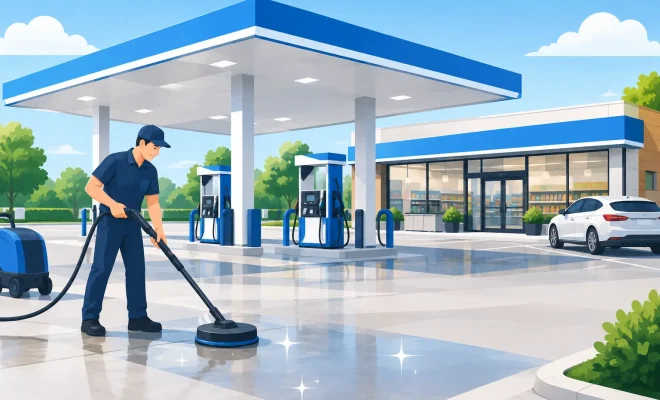
Gas Station Cleaning Services That Keep Customers Coming
A customer may spend only five minutes at your station, but they notice the property before they reach the pump. Gas station cleaning services help protect that first impression by removing the stains, buildup, litter, and organic growth that make a busy location look neglected. For convenience store and fuel station operators, exterior cleanliness is not just cosmetic. It affects customer confidence, walk-up safety, and the condition of the surfaces you have invested in.
A clean forecourt tells customers that the rest of the operation is being managed with care. A dirty one can raise doubts quickly, especially when oil stains, gum, mildew, overflowing trash areas, or blackened sidewalks are in plain view. In a high-traffic business, those details add up every day.
Why Gas Station Cleaning Services Matter
Gas stations face a tougher cleaning environment than most commercial properties. Vehicles track in dirt, brake dust, oil, grease, and fuel residue. Customers spill drinks near entryways, drop gum on sidewalks, and move trash around the parking area. North Florida and South Georgia weather add humidity, pollen, mildew, algae, and storm debris to the problem.
Routine sweeping and employee cleanup are necessary, but they cannot remove embedded staining or restore exterior surfaces once buildup takes hold. Professional commercial cleaning reaches the areas that daily maintenance cannot handle effectively, including concrete around fuel islands, storefront sidewalks, dumpster pads, curbs, walls, canopies, and drive lanes.
The right work also helps preserve your property. Organic growth can make walkways slick. Grease and oil staining can become harder to remove as time passes. Mildew and algae can dull painted surfaces, signage areas, and exterior building materials. Addressing these concerns early is often less disruptive and more cost-effective than waiting until the site needs a major cleanup.
The Areas Customers See First
The fuel canopy and pump area usually receive the most attention, but customers form an opinion from the moment they turn off the road. A thorough cleaning plan should consider the complete path from the entrance to the store.
Fuel Islands, Pumps, and Concrete Pads
Fuel islands collect some of the most visible grime on the property. Tire marks, petroleum-related staining, gum, spilled beverages, and general foot traffic can leave concrete dark and uneven-looking. These areas need careful cleaning methods that account for nearby equipment, surface condition, drainage, and operating hours.
Not every stain comes out completely, particularly old oil stains that have penetrated porous concrete. A dependable cleaning contractor should set realistic expectations while using the right process to improve the appearance of the pad without creating unnecessary risk to equipment or surrounding surfaces.
Sidewalks, Storefronts, and Entryways
Your entrance is where customers slow down, look around, and decide whether the store feels welcoming. Sidewalks can develop black mildew, algae, gum spots, food stains, and sticky residue that standard rinsing will not remove. Storefront walls, windowsills, awnings, and trim can also collect pollen and organic growth.
Professional washing improves the appearance of these customer-facing areas while helping reduce slippery conditions. Surface-appropriate pressure and low-pressure soft washing matter here. Too much pressure can damage painted finishes, signage, caulking, and more delicate exterior materials. Too little cleaning leaves the problem behind.
Dumpster Pads, Curbs, and Back-of-Store Areas
Customers may not always walk behind the building, but staff, vendors, inspectors, and neighboring businesses see these spaces. Dumpster pads can hold grease, leaking bags, odors, and staining that need more attention than a quick rinse. Curbs and loading areas also collect dirt and algae, especially in shaded spots.
These areas should be part of the service plan, even if they are cleaned on a different schedule than the front of the property. The trade-off is simple: frequent front-area cleaning protects customer appeal, while planned back-area cleaning supports a cleaner operation as a whole.
Choose Cleaning Methods That Protect the Property
Commercial exterior cleaning is not about using maximum pressure everywhere. It is about matching the method to the surface and the soil. Concrete may need controlled pressure washing and targeted treatment. Building exteriors, painted surfaces, awnings, and other sensitive materials may require soft washing with a lower-pressure application.
This distinction is especially important at gas stations, where equipment, signage, paint, drainage areas, and constant customer traffic all require care. Improper pressure can scar concrete, force water into unwanted areas, strip finishes, or damage surfaces that did not need aggressive treatment in the first place.
A qualified provider should inspect the site, identify the major problem areas, and explain what can reasonably be improved. They should also use cleaning products with the surrounding environment in mind. Eco-safe products and responsible application methods are a practical choice near landscaping, public walkways, and a property visited by families, pets, and employees throughout the day.
Build a Schedule Around Your Traffic
There is no single cleaning schedule that fits every fuel station. A busy location near a highway, college area, hospital, or major commuter route may need more frequent service than a smaller neighborhood station. Properties with heavy tree cover, shade, or persistent moisture may also need regular attention for algae and mildew.
For many locations, a recurring plan works better than waiting for the property to look visibly dirty. Regular service keeps staining from becoming deeply set, makes each cleaning more manageable, and helps maintain a consistent appearance. It can also reduce the pressure on store employees, who already have important customer-service and operational duties.
Timing matters just as much as frequency. Cleaning during slower hours can reduce interruption to customers and staff. Some work may need to be planned around deliveries, fuel operations, or peak traffic windows. A commercial cleaning company should be willing to discuss those practical details before service begins.
What to Look for in a Commercial Cleaning Partner
A gas station is an active worksite, not an empty building. The company you hire should understand the need for careful scheduling, clear communication, and professional conduct around customers. Licensed and insured service is a basic expectation, especially when cleaning high-traffic commercial surfaces.
Experience with commercial exterior cleaning is also valuable. A contractor should know the difference between cleaning a residential driveway and working around fuel islands, storefront traffic, delicate surfaces, and drainage considerations. Ask about their cleaning approach, product safety, insurance coverage, and whether they stand behind their workmanship.
Seminole Power Wash provides commercial exterior cleaning for gas stations and convenience stores across Tallahassee, North Florida, and South Georgia. As a family-owned, veteran-owned company, the focus is straightforward: careful service, surface-appropriate methods, eco-safe products, and results that help your property look prepared for business.
Keep Cleanliness From Becoming a Crisis
The best time to address oil staining, mildew, dirty sidewalks, and neglected curbs is before customers begin commenting on them. Walk your property from the road to the front door as if you were visiting for the first time. Look at the pump pads, sidewalk edges, entrance, trash area, canopy supports, and any shaded concrete where algae may be growing.
If the property no longer reflects the standard you want customers to associate with your business, schedule a professional assessment. A free estimate can help you prioritize the work, choose a practical service interval, and protect the areas that need the most attention first.
Customers may not remember every clean detail, but they remember how a place made them feel. A clean, cared-for station gives them one less reason to drive past the next time they need to stop.



You must be logged in to post a comment Login